
Your Custom Text Here
Contrast Conundrum City
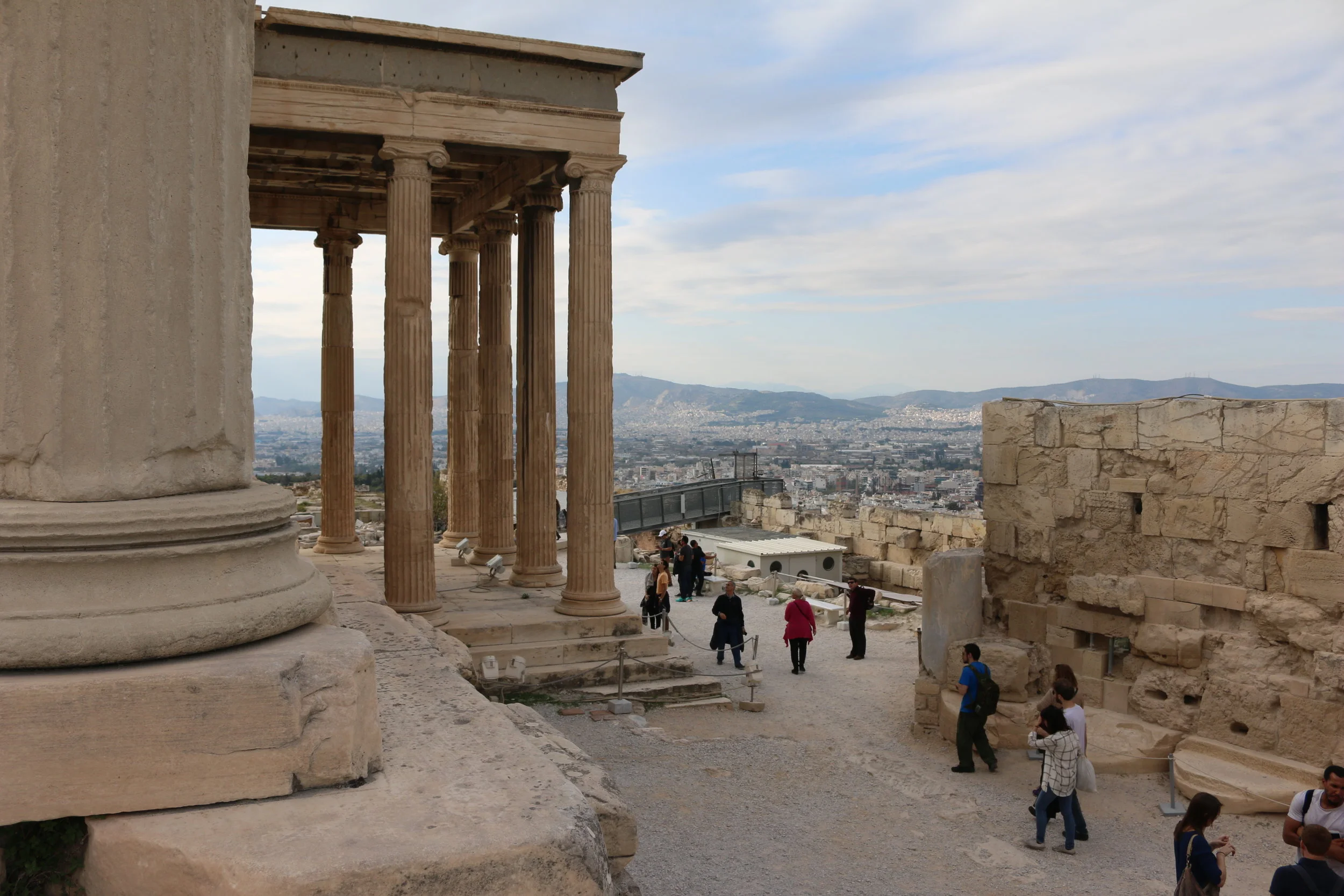
Walking the narrow, winding streets, moving through space and time, removing the lens cap from my camera, only to lower the camera from my eye as I gaze up and up and up. The Acropolis, the Parthenon, the Hill of the Muses. Ancient architecture, modern graffiti, anarchist riots, the National Archaeological Museum. Athens: a city of ultimate contrasts and conundrums. The exhilaration, the sites my mind could never fully comprehend. I feel as though my eyes had been in the dark for so long that it was taking them more time than usual to adapt to the bright light of the city.
I saw the olive tree. The one Athena gifted to Athens. It’s situated in the Acropolis, next to the marble stone that Poseidon destroyed. Ok, not the actual tree or whatever but, at the end of the day, what does it matter? Walking through the city, I feel as though I’m walking through a Gabriel Garcia Marquez novel. Athena, Poseidon, Zeus, Aphrodite and Ares were all just as real as figures from our histories: Abraham Lincoln, Golda Meir, Genghis Khan, Simon Bolivar. The gods were a living, breathing part of the city and their influence remains a vital part of what makes Athens breathtakingly beautiful.
To be perfectly clear, the city is far from perfect. It has its problems as every place tends to do. In Athens, the problems are relatively obvious and economic/financial in nature. Beautiful residential buildings, constructed before the economic crisis, remain uninhabited, lonely and deserted. Homeless men roam the streets, sleep on park benches. Walking through the Aristotelean prison which, ironically, is considered by historians to have been an ancient bathhouse and not a prison, I found a homeless man, barefoot and dirty sleeping next to the historical site. This is what I mean when I speak of contrasts. Riveting history and economic hardship are two Athenian qualities that immediately stand out to the stranger tourist’s eye.
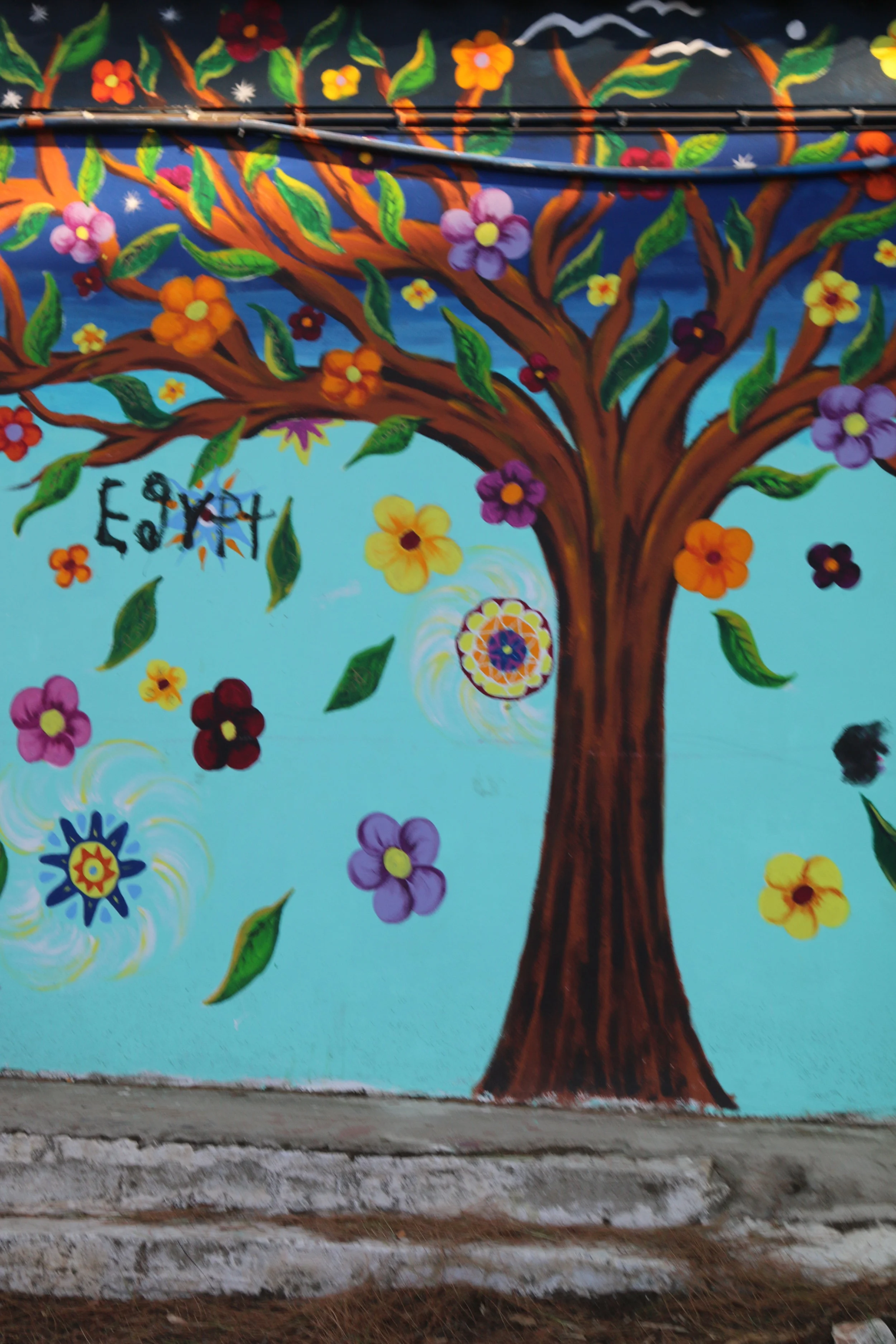
Roaming the streets of Exharkia, a neighborhood in Athens, I stumbled on blocks and blocks of graffiti. Not “F*&$ the police” kind of graffiti (although there’s plenty of that… a universal sentiment, I s’pose) but gorgeous murals, significant and thrilling in their not-so-subtle qualities. A homeless man, depicted sleeping on a street, covers the entire façade of a building adjacent to a written quote which says “Dedicated to the poor and hungry, here and around the globe.” Not so subtle. Another mural, approximately 10 feet high portrays two clasped hands, down-turned, either in prayer or in handcuffs. You don’t have to look too hard to find the metaphors of the city, screaming at you, begging you to understand the struggle.
And I can’t. Despite my best efforts, I can’t empathize with the struggle because I’m a young American, swimming in student loans but with a bright future ahead of me. I can afford to travel Europe, work on my art, seek out adventure and say things like “I’m on a journey of self-discovery.”**** I’m privileged in many ways and I have never been so aware of this fact as I am now. I don’t feel an overwhelming sense of guilt that oftentimes accompanies such realizations but I do feel an obligation to take advantage and to bring as much as I can to the world through this privilege.
Thanks, Athens. Thanks for being your beautiful self. For continuing to inspire the present with the past, for bringing my childhood heroes Poseidon, Herakles, Aphrodite and, especially the bo$$ lady, Athena to life. I feel as though I’ve met a superhero and I can go home, happy in my knowledge that the city I’ve fallen in love with will remain protected by the wisest superlady to ever have existed.
I won’t continue gushing about the city but I’ll say one last thing: if you’ve never been to Athens (and even if you have), please do so. You won’t regret it, I promise.
****Not that I would ever do such a thing because I’m not a stupid idiot from a dumb movie but you get the point.
On a More Serious Note
Good morning/afternoon/evening my dearest compatriots –
As I sit in my dimly-lit, totally overpriced cabin on this gigantic rocking ferry (read: Titanic-esque cruise ship), I feel compelled to put down a few thoughts that have been rolling around in my head these past few days.
First, to start: I arrived in Lesvos, Tuesday morning. I spent the day getting acquainted with my surroundings. Mytilene, the capital is a beautiful tiny town that makes me think of all the “by the shore” towns I’ve visited in the past: a funky, graffitied combination of Nice/San Juan/Cinque Terre village with some of the most delicious food I’ve ever tasted (Gyros, people… gyros all day.) Tuesday evening, I met with my contact at Pikpa, a refugee camp just outside of Mytilene. When I arrived, I was greeted with a multitude of smiling faces, warm handshakes and a cup of tea.
Over the next few days I would meet people from all over the world: refugees from Syria, Afghanistan, the Congo, you name it. I would talk with people of all different ages about topics ranging from their own personal plights to “what is love?"
One conversation I had that really stuck with me was one I had with my contact at Pikpa, a man named Constantine (known as Dino to his friends in Lesvos) who left his life in Boston behind and, in his early 40’s came to Pikpa to brighten lives and to literally rescue refugees from possibly dire fates in the ocean. Dino volunteered in Pikpa and worked as a yoga instructor at the camps around Mytilene and in a yoga studio in the city itself. Last year, he and a number of other volunteers from Pikpa, joined the Coast Guard to rescue refugees from the middle of the ocean. These refugees had paddled shoddy boats through the ocean in order to escape their former home countries (typically by way of Turkey). Dino, with shaking hands recounted much of his experience. The all-night boat rides, searching for people in the dark, praying to find them alive. His account had led to a more philosophical discussion on the many reasons as to why outsiders such as Dino came to the camps to help. What drove people to drop their lives and help strangers in their time of need? Dino mentioned the word selfless in response to this question. According to him, the best volunteers, the ones who help the most are the ones who want only to bring fulfillment to others’ lives. The worst kinds of volunteers are those that arrive with the hope that a picture with a poor refugee here or a selfie there would bring them the kind of saintly self-promotion that many people desire and work hard to achieve.
Perhaps I’m a bit jaded. I don’t really believe in selflessness. In my, once again, humble opinion, everything that we do, everything that we are, is selfish. It’s important to understand the motives that drive each person but, at the end of the day, we all gain fulfillment and, in certain circumstances, self-actualization by doing whatever it is that makes us happy. I wish I could have stayed at Pikpa. I wish I could have done more than to ask questions and fill myself with the understanding of the reality facing its residents. I wish I could continue to see the smiling faces every day because, to me, there is nothing more beautiful than a face that smiles genuinely. That is what I saw at this camp. Having spoken to many volunteers and workers, it seems to me that my sentiments are experienced rather universally. Selfishly, we feel self-fulfilled at the idea that we make a difference in the lives of however many or few people we are able to influence. Granted, this type of selfish behavior differs from the kind that Dino described in those that use these smiling faces to promote themselves; however, whether we are promoting ourselves to the outside world or to our own egos, the fact remains that we all desire a reality in which we are the best versions of ourselves, however that is defined.
This blog post has turned out to be a rather monotonous monologue in which I have rambled about nothing outstandingly exceptional and perhaps have made myself seem a bit pretentious. I’ve discovered that blogging makes me rather self-conscious as I don’t feel I have anything very exciting to write about. I suppose I could write about the people I met during my time at Pikpa or at (karatipe) but that would feel wrong, I think; as though I were somehow exploiting the narratives of those that I had met and who had spent time with me. I hope that the film I am working on will do their stories and backgrounds justice.
I will emphasize one piece of the refugees’ stories that struck me the most: the impatience in their voices. Each individual that I met, that was kind enough to share his or her story with me was waiting to receive documents, allowing passage to other countries in Europe. A lengthy and tedious process, one young gentleman told me that he had just undergone his third interview after which, he expected to receive documentation that would allow him to go with his family to his uncle in Germany. He had been waiting to receive these papers for 9 months, living in various refugee camps, with no right to work or study. His life was in limbo. A young boy, determined to learn and receive an education whose entire life rested on the eventual receipt of a piece of paper.
I am undergoing a very contrasting set of emotions at the moment. On the one hand, I am dreaming of the day I can return to Pikpa, to lend a hand, to see the smiling faces. On the other hand, I hope that very soon, the need for camps like Pikpa and volunteers like Dino will be eradicated. It even brings a little light to my heart to think that I may never see those smiling faces in Pikpa again, for perhaps that will mean that these beautiful people managed to make it to their ultimate destinations, build new homes for themselves and future generations in Germany, France, the United States, wherever they will be welcomed warmly. I hope that one day the impatience in these people’s voices will be replaced with hope and joy for their bright futures.
Hello. Where aM I?
Hello you beauteous creatures, you delectable humans, you magnificent readers, you.
I’ve missed you. Have you missed me?
I have not written in quite some time. And for that, I must admit, I feel terribly guilty. To be honest, I had not realized how much pressure I would feel to come up with unique and clever things to discuss on this forum. It’s not like anybody other than my mother (hi, mom!) reads this. However, I do feel that if I’m going to send my ideas out into the virtual void, those ideas should at least be interesting for me to write about, right?
Right. Now…
For those of you that communicate with me regularly, you probably know that I have not been able to speak about anything other than my European excursion for quite some time. (Sorry I ain’t sorry!) Well, now that I’m in Europe, I see no reason not to continue this trend. So here it goes… my first few days in Greece:
I landed late in the evening on Thursday, October 20th. As my plane touched the ground and taxied to the terminal, I felt an unexpected shock come over me. In large, bright, lit-up letters, the front of the airport terminal read: “THESSALONIKI – MAKEDONIA.”
Makedonia? Like, Macedonia? Like, the country that is NOT Greece?
“How did this happen? How could I get the wrong ticket? I bought these tickets with Zhenia [my super responsible, adult cousin for those of you that don’t know]. How could we both misread the ticket? Ok. Ok. Relax. You’ll book a hotel for tonight. How expensive could a hotel in Macedonia be? Then tomorrow, you’ll take the next flight to Thessaloniki, Greece. That might be pricey but you have no other options.”
As I got out of the plane and onto the bus that would take us into the airport, these and many other thoughts jumbled in my brain, promising to cripple me from shear shock. HOW COULD I HAVE BEEN SO STUPID?
And then… a beacon of hope… a familiar sign (or rather, a familiar letter.) The wonderful, gorgeous letter Ф.
This letter just happens to be the Greek equivalent to the letter “F.”
I know that Greek and Russian just happen to share the a couple of letters here and there and that this shining letter Ф is one of them. I felt a wave of pure relief wash over me.
Fun fact: the Macedonian language also uses the much of the same script as Russian and Greek but does not include the letter Ф.
This little anecdote was really my first taste to a generally confusing first few days in Greece.
[I’m sorry but why does an airport have the name of a DIFFERENT COUNTRY on it in BRIGHT LARGE LETTERS?! Not cool, Greece, not cool.]
My lack of familiarity with Greek language, culture, customs, etc continued to lead to embarrassing situations including one in which I attempted to pay for a bus ticket with a pass that was clearly too large for the machine while complete strangers watched and judged, silently.
I won’t continue to amuse you with further stories of my humiliation; however, I would be happy to tell you about each embarrassing story when I get home, dear reader.
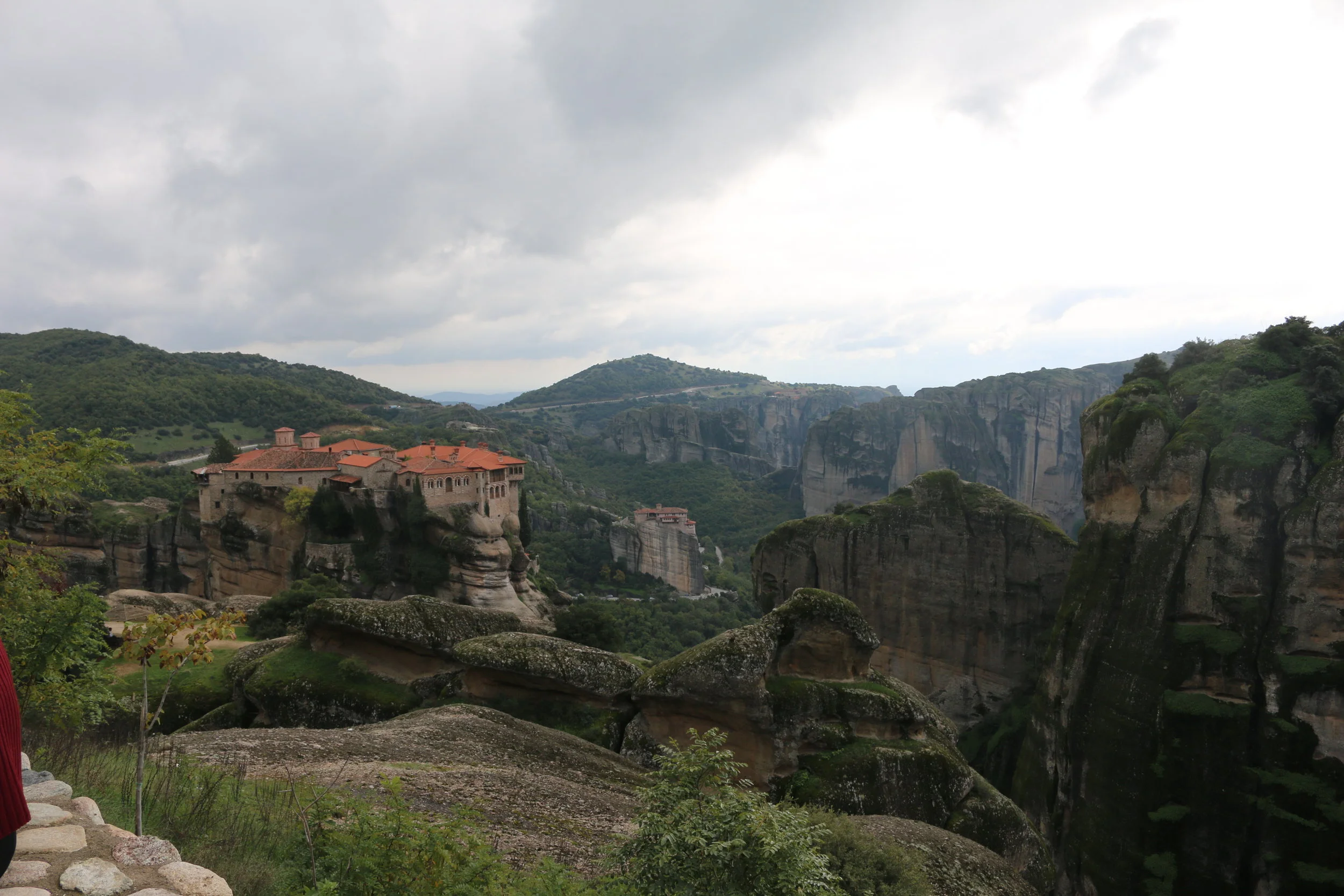
All of these embarrassing moments and many enjoyable moments have led me to reflect on the decision I have made to travel through Greece on my own. I am thrilled at the adventure I have already experienced in Thessaloniki and excited for the time I will spend in Lesvos and Athens on my own. I have seen an incredible amount of beauty and culture. Visiting the historical sites in Thessaloniki, traveling to the Monasteries at Meteora (where I met up with my little brother) have all been enriched as I have learned to experience for the sake of experience, rather than for the sake of the story. When traveling with others, my favorite part is sharing the moment, reliving the story and relating the experience with your travel partner. In traveling alone, I have missed this part of the journey; however, I have discovered a new piece of the puzzle that I had not considered previously. I love seeing and experiencing without relating to anyone else. In our everyday lives, we sometimes forget to live for the sake of the experience and, instead, we experience for the sake of proof of the experience such as: an Instagram or a Snapchat. We care more about others relating to our stories rather than enjoying the stories to the best of our abilities. Now, as you all know, I am a huge fan of a good snap; however, I find myself occasionally overstimulated with the amount of people that I want to relate my experiences to.
Here, I feel no such pressure. I am enjoying the awe I feel at the site of an ancient ruin, the embarrassment at a mispronunciation, the joy of a sibling reunion (s/o @David), the stress of a long journey and, most importantly, the thrill of traveling independently. So, to ALL the Greek people who read my blog (ie: none)… judge away, people!
In my [humble] opinion, I believe that everyone could benefit from experiencing the utter confusion, anxiety and stress that result from finding oneself in completely foreign circumstances. As a total outsider, everything here is new to me including the absurdly generous amount of eye contact locals use. [Nothing to see here, people! Just stuffing my face on the bus. Really not that interesting.] The culture shock I have experienced is unlike anything I have ever felt before and these few days have taught me to be comfortable in my skin and to ignore the nagging voice in my head that feels ashamed when I’m lost or confused. I have learned to accept and even enjoy the moments that could cause anxiety.
On Thursday, I may have felt utter humiliation if I were to ask a local the question “Where am I right now?”
NOT ANYMORE!
Liz 2.0 feels no shame and will continue to ask until she figures out where the &*$% she is.
At least I made it to the right country, right, mom?